


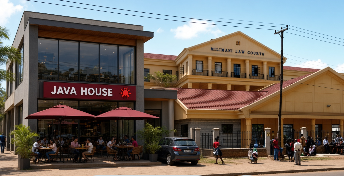
The High Court in Nairobi has struck out a constitutional petition by former Nairobi Java House employee Gidraf Gatira Maingi who had sued the company over the alleged unauthorised use of his photograph.
Justice Roselyn Aburili ruled that Maingi should first have pursued remedies available under the Data Protection Act before approaching the High Court.
The judge held that although the High Court retains supervisory jurisdiction over data protection disputes, Maingi had not exhausted the statutory mechanism provided through the Office of the Data Protection Commissioner (ODPC).
“I find that whereas this Court retains ultimate supervisory jurisdiction, and parties aggrieved by the Data Commissioner’s findings can appeal directly to the High Court, this Court lacks initial jurisdiction over the petition because the Petitioner did not first exhaust alternative remedies by filing a complaint with the Data Protection Commissioner,” Justice Aburili ruled.
Maingi had claimed that Java House violated his rights to privacy, dignity, publicity and information by using his photograph without his prior informed consent.
According to court documents, Maingi was employed by Java House as a steward from January 2015 until July 2021, when he was summarily dismissed following disciplinary proceedings over allegations of theft and lack of integrity.
He told the court that photographs of him wearing company-branded merchandise had been taken during his employment and that he later discovered in December 2021 that Java House was using his image and name on an online recruitment platform.
Maingi argued that his image had been published globally without his informed consent and sought a declaration that his constitutional rights had been violated, as well as general damages.
He had asked the court to award him Sh10 million in compensation.
Java House opposed the petition, arguing that the photographs had been taken with Maingi’s knowledge and voluntary consent during his employment.
The company also relied on Clause 11 of his employment contract, arguing that it assigned intellectual property rights in works made for hire to the company and waived moral rights.
Java House maintained that Maingi’s photograph was used only as a profile image on its Shortlist recruitment portal to accurately represent staff and was not used for commercial marketing or monetary gain.
The company later removed the image after Maingi raised his complaint, while denying liability.
Justice Aburili, however, did not determine whether Java House actually violated Maingi’s privacy or image rights.
The judge found that the central complaint fell within the Data Protection Act, which regulates the processing of personal data and establishes mechanisms for resolving complaints.
“The petitioner has not demonstrated that he filed any complaint with the Office of the Data Protection Commissioner or that the remedies under the Data Protection Act are ineffective,” the judge said.
The court further held that constitutional litigation should not be the first avenue where an effective statutory mechanism exists.
“In the end, I find that the petitioner failed to exhaust the available effective dispute resolution mechanisms and to adhere to the doctrine of constitutional avoidance,” Justice Aburili ruled.
Consequently, the judge struck out the petition but allowed Maingi to pursue redress under the Data Protection Act.
“Accordingly, the Petition dated 21st March 2022 is hereby struck out. The petitioner is at liberty to invoke the provisions of the Data Protection Act for redress,” the judge ordered.
Each party was ordered to bear its own costs, bringing the constitutional petition to an end.

