


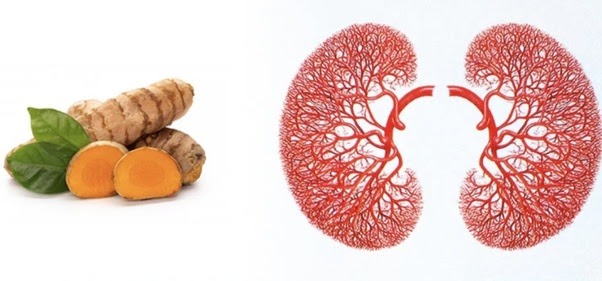
It sits in almost every Kenyan kitchen, a small tin of burnt-orange powder that turns pilau golden and gives curry its warmth.
Turmeric has long been sold as a miracle: anti-inflammatory, antioxidant, a natural painkiller in a jar.
But a growing pile of medical case reports is asking an uncomfortable question, could the same spice that soothes your joints be silently scarring your kidneys?
Doctors in the United States recently documented the case of a 69-year-old man who walked in for a routine check-up and walked out with a kidney failure diagnosis nobody saw coming. His urine looked unremarkable.
His history offered no obvious red flags, until his doctors traced the damage to something almost comically ordinary: <cite index=”3-1″>chronic use of turmeric supplements, compounded by long-term antibiotic use and diarrhoea.
The culprit was oxalate, a natural compound that, in excess, crystallises inside kidney tissue and triggers inflammation.
It is a rare case, but rare does not mean irrelevant.
It is a warning flare over an assumption millions of people make: that because turmeric is “natural,” it is automatically harmless in any quantity.
Turmeric, much like spinach, beetroot and nuts, contains soluble oxalates.
In the gut, these can bind with calcium to form calcium oxalate, the compound behind roughly <cite index=”9-1″>75 percent of all kidney stone cases</cite> worldwide.
Research into curcumin, turmeric’s active compound, has found that <cite index=”9-1″>high-dose supplementation measurably raises urinary oxalate excretion, with one trial recording a 20 percent spike after just one gram of curcumin taken daily</cite>.
That is a dose far higher than what lands on your plate at dinner.
Herein lies the twist that most viral health posts skip: dose is everything.
<cite index=”9-1″>Ordinary culinary turmeric, at roughly one to three grams a day, appears to carry minimal risk</cite> for most healthy people.
The danger climbs sharply with concentrated capsules and powders, the kind sold in wellness shops promising joint relief, weight loss or “detox.”
Here is where the story stops being a simple villain narrative.
Laboratory and animal studies paint a strikingly different picture of curcumin, one where it acts as a guardian of kidney tissue.
Researchers studying curcumin in stone-induced rats found it <cite index=”1-1″>reduced oxidative stress damage in kidneys affected by stone formation</cite>, and separate mouse studies found it <cite index=”2-1″>had protective effects against calcium oxalate deposits and related renal injury</cite>.
Case researchers reviewing the American patient’s condition noted the irony directly: <cite index=”3-1″>while turmeric’s oxalate content poses a kidney risk, curcumin itself may help kidney cells recover by calming inflammation, mopping up damaging free radicals, and protecting cell function</cite>.
In short: the same molecule can be protector and provocateur, depending entirely on how much of it, and in what form, enters the body.
But you should be discerning. The emerging medical consensus, cautious as it is, draws a clear line between turmeric as a spice and turmeric as a supplement.
Sprinkling it into your stew is not the same as swallowing concentrated capsules daily for months.
Anyone with a personal history of kidney stones, reduced kidney function, or a family predisposition to them should treat high-dose turmeric or curcumin supplements the way they would any other concentrated compound, with medical guidance, not blind trust in the “natural” label.
Scientists studying the field agree on one thing above all: human trials on long-term supplement use remain thin, and more rigorous research is needed before turmeric’s kidney story is fully written.
Until then, the golden spice keeps its place on the table, just, perhaps, not in your medicine cabinet without a doctor’s nod.

