


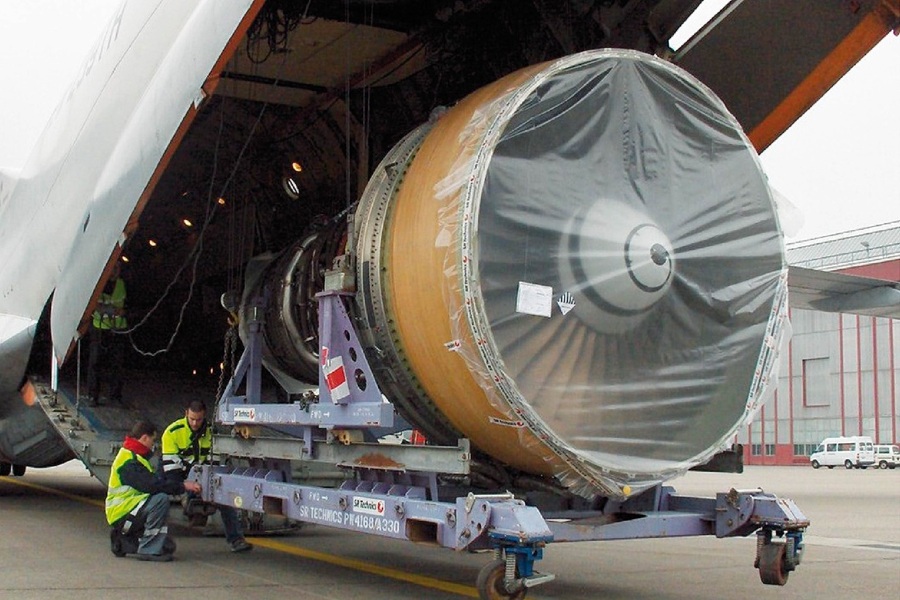
An aircraft grounded by one missing component can trigger costly disruptions, forcing airlines into a race against time to restore operations.
For airlines, an unexpected fault discovered during maintenance can quickly turn into an expensive logistical headache, particularly when a replacement component must be sourced and transported across continents within days.
Beyond the maintenance hangar, a delayed aircraft can affect flight schedules, reduce available capacity and expose airlines to additional operational costs as they scramble to keep their services running.
The challenge is not always finding the missing part.
Getting it to the right airport, with the right handling equipment and within the required timeframe, can prove equally demanding.
In the aviation industry, where aircraft availability is closely tied to operational efficiency, the movement of urgent spare parts has become a critical part of keeping airlines in business.
One such case involved a European airline that needed a replacement thrust reverser transported from California to London within six days after a fault was discovered during scheduled maintenance.
A thrust reverser is a critical aircraft component that helps slow down an aircraft after landing by redirecting engine thrust.
The replacement component required specialised main-deck cargo space aboard a Boeing 777 or Boeing 747 freighter, but limited fourth-quarter aircraft availability and inadequate handling equipment at the destination airport made a direct charter impractical.
Rather than wait for a suitable aircraft to become available, logistics specialists Chapman Freeborn adopted an alternative approach.
The company secured space on an existing scheduled freighter service into continental Europe before arranging road transport to the maintenance facility in London.
The component arrived within the required six-day deadline.
The operation demonstrated how the most obvious or direct route is not necessarily the fastest when transporting urgent aircraft components.
“Looking only for the most direct flight can narrow the available options,” Chapman Freeborn Aerospace Manager for Europe Ben Cupidi said.
“In this case, combining available main-deck capacity into Europe with road transport to the final destination created a faster and more workable solution than waiting for an aircraft that could operate the entire movement directly.”
The transportation of aircraft spare parts is a specialised logistics operation, particularly when an airline is dealing with an aircraft-on-ground (AOG) situation.
An AOG event occurs when an aircraft is unable to fly because of a technical problem, making the immediate sourcing and delivery of replacement components essential.
However, such emergencies are not limited to unexpected breakdowns.
Even scheduled maintenance can be disrupted when engineers discover a faulty component that needs replacement before an aircraft can return to service.
Airlines may turn to their own inventories, shared spare-parts pools or arrange to borrow or purchase components from other suppliers.
For expensive and specialised components such as thrust reversers, sourcing replacements can be particularly challenging because of limited availability and the cost of securing the required equipment.
Once a replacement is identified, the next hurdle is transporting it before the maintenance delay affects the airline’s wider operations.
Why the biggest aircraft is not always the answer
Depending on the size, weight and urgency of a shipment, airlines and logistics providers have several transportation options.
These include Next Flight Out (NFO), where cargo is booked on the earliest suitable commercial flight; On-Board Courier (OBC), where a courier personally accompanies the shipment; part-charter, which secures space on an existing cargo aircraft; and a dedicated aircraft charter.
Each option comes with different operational considerations.
For smaller urgent components, NFO and OBC can provide faster solutions, subject to available capacity and cargo restrictions.
Larger and heavier components may require dedicated freighter capacity, while part-charter offers an alternative by allowing customers to secure guaranteed space on an existing cargo flight without paying for an entire aircraft.
Dedicated charters offer greater control over departure times and routing, but securing a suitable aircraft can take time, particularly where specialised cargo-handling equipment is required.
“The urgency of an aerospace shipment does not automatically mean that the customer needs to charter an entire aircraft,” Cupidi said.
“The priority is to understand the cargo, deadline and operational constraints, and then identify the solution that can deliver the part in time.”
The dimensions of the cargo, destination airport, available capacity and onward ground transportation all influence the decision.
“The dimensions of the cargo are usually the first filter, but they are not the only consideration,” Cupidi said.
“The destination, deadline, available capacity and onward transport can completely change which solution is fastest. Customers benefit from comparing the full set of options rather than defaulting to the largest aircraft.”
For airlines, the consequences of a delayed spare part extend beyond the cost of transporting the component.
An aircraft that remains grounded longer than anticipated can force an airline to revise its flight schedules, adjust fleet deployment or seek alternative capacity to serve passengers.
The longer the aircraft remains unavailable, the greater the pressure on operational planning.
This makes time-critical aerospace logistics an important link in the aviation supply chain, bringing together airlines, spare-parts suppliers, freight forwarders, cargo operators and maintenance facilities.
Recognising the growing complexity of transporting urgent aircraft components, Chapman Freeborn Europe launched a dedicated aerospace division in June 2026.
The service combines full aircraft charter, part-charter, NFO and OBC capabilities, supported by a round-the-clock AOG desk operating 24 hours a day, throughout the year.
The company says the approach is designed to assess individual shipment requirements, identify possible logistical obstacles and explore alternative transportation arrangements.
With more than 50 years of experience in air charter services, Chapman Freeborn is part of Avia Solutions Group, which operates across the global aviation industry.
Ultimately, the six-day delivery of the replacement thrust reverser to London illustrates the delicate balance between time, cost and capacity in aviation logistics.
For an airline waiting to return an aircraft to service, the difference between an available replacement component and one still in transit can mean more than a delayed maintenance schedule.
It can determine how quickly the aircraft returns to the skies.

