


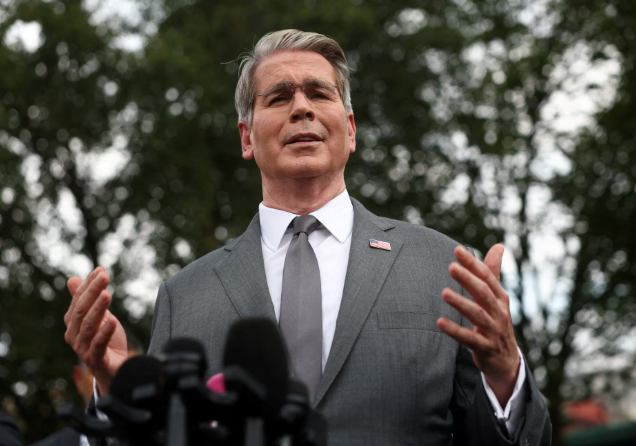
Washington and Tehran are facing a fresh escalation after the United States announced plans for what Treasury Secretary Scott Bessent described as an unprecedented economic offensive against Iran and its trade partners.
Bessent said Washington was entering the endgame of its campaign against Tehran, pledging to use the full weight of the US government to cut off Iran’s remaining economic lifelines.
“We are now entering the endgame. At dawn begins an economic D-Day, the single greatest financial offensive ever marshaled against an adversary,” Bessent said.
He said the objective was to sever every economic lifeline that sustains the tyrannical regime until Tehran stands alone.
Bessent also warned countries and businesses that continue dealing with Iran that they could face consequences from Washington.
The Treasury Secretary is expected to outline details of the new measures, including secondary sanctions targeting Iran’s trade partners, banks, shipping companies and oil buyers.
The campaign follows President Donald Trump’s warning that countries providing Iran with economic support would face what he called “TREMENDOUS Economic Consequences.”
Trump has described the new measures as an “ECONOMIC D-DAY” and warned that Washington would pursue unprecedented economic isolation of Tehran.
Bessent has also described the strategy as a “one-two punch” combining the existing blockade with what he called the toughest sanctions in history.
The latest US pressure comes as Iran’s economy faces mounting strain.
The Iranian rial fell to a new record low on Monday amid concerns over the impact of further sanctions and economic isolation.
Tehran has responded with a direct threat to disrupt oil exports across the Persian Gulf if Washington continues its campaign.
Mohsen Rezaei, secretary of Iran’s Supreme National Security Council, warned that Iran could stop all oil exports through the Strait of Hormuz and elsewhere in the Gulf.
“If the economic war continues, not a single drop of oil will be exported, neither through the Strait of Hormuz nor from anywhere in the Persian Gulf,” Rezaei said.
He further warned that Iran would regard any country supporting the US economic campaign as an “act of war.”
The threat has heightened concerns over global energy supplies because the Strait of Hormuz is a critical route for international oil shipments.
Any disruption could send fresh shock through global energy markets.
The escalation comes as diplomatic efforts continue, with Pakistan’s army chief visiting Tehran on Monday in a mediation mission amid the worsening confrontation.
Iran has also warned neighbouring countries against cooperating with Washington, raising fears that the economic confrontation could widen beyond the two countries.
The latest developments mark a significant escalation in the US-Iran confrontation, shifting greater attention toward economic warfare, sanctions and control of vital energy routes.

