


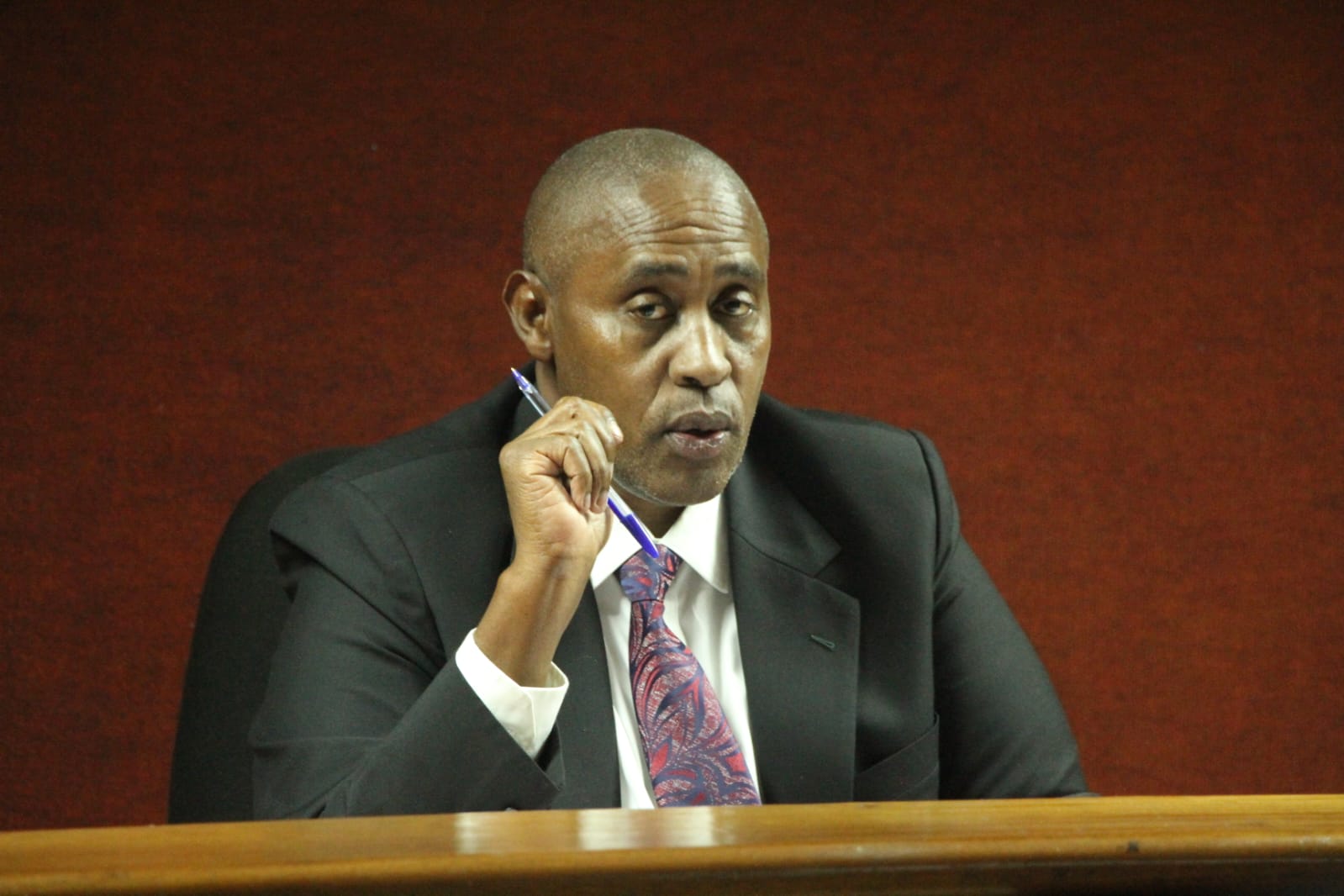
The High Court has ordered IPOA and KNCHR to resume investigations into three missing Kenyans, amid evidence they were allegedly arrested by hooded civilian police officers.
Justice Alexander Muasya Muteti of the Milimani High Court directed the Independent Policing Oversight Authority (IPOA) and the Kenya National Commission on Human Rights (KNCHR) to continue investigating the circumstances surrounding the disappearance of Evans Otieno Omondi, Michael Oloo Osoro and Macmillan Kiarie Mugo.
Evidence tendered before the court indicated that the three men were allegedly arrested by hooded individuals described as civilian police officers.
The evidence emerged through testimonies by their parents and wives, who narrated the circumstances surrounding their last known whereabouts and disappearance.
According to the evidence presented before Justice Muteti, the three men were allegedly seen at various locations within Nairobi estates in the days preceding the June 25 Gen Z anniversary protests before they disappeared.
The testimonies raised questions over the circumstances of their alleged arrests, their movements and what happened to them after they were allegedly taken by the hooded individuals.
The police have denied arresting the three men and maintained throughout the proceedings that they were neither arrested nor held in police custody.
Justice Muteti said IPOA and KNCHR should not halt their investigations merely because the matter is pending before court.
“Not withstanding the provisions of Section 26 of the IPOA Act and Section 30 of the Kenya National Human Rights Commission Act Cap.71 the two agencies in the spirit of transparency and promotion of accountability, be and are hereby ordered to continue with their independent investigations into the circumstances leading to the arrest and disappearance of the subjects,” Justice Muteti ruled.
The court further directed IPOA and KNCHR to share the outcome of their investigations with the court.
“The Interested parties shall be under duty to share with this court the result of their findings,” the judge said.
The ruling arose from a habeas corpus application filed by Pamela Aloo, wife of Evans Otieno Omondi, and Siasa Place over the disappearance of the three men.
The court was told that IPOA had received complaints from the families and opened inquiry files but had not proceeded with investigations, citing Section 26 of the IPOA Act.
KNCHR similarly acknowledged receiving complaints but said it could not investigate because Section 30 of the Kenya National Commission on Human Rights Act barred investigations into matters pending before court.
Justice Muteti rejected the restrictive interpretation of the two provisions, saying they were not intended to prevent investigations simply because a matter was before court.
“The provisions of Section 26 of the IPOA Act and Section 30 of the KNHRC Act cannot have been intended to bar investigations into a matter simply because it is before a court,” the judge said.
He said the restrictions were intended to prevent investigations that could compromise the administration of justice, rather than inquiries aimed at establishing the whereabouts of missing persons.
“The investigations can only be of benefit to securing the liberty of the individuals as opposed to compromising the integrity of the instant proceedings,” Justice Muteti said.
The judge said habeas corpus proceedings required the court to pursue the truth about the alleged detention or disappearance of the subjects.
“The court should task any agency of government that may be able to help with investigations into the whereabouts of the concerned subject without being inhibited by technicalities that may only serve to slow the wheels of justice and defeat the course of justice,” he ruled.
Justice Muteti also declined a request to declare Sections 26 of the IPOA Act and 30 of the KNHRC Act unconstitutional, saying such a determination would require a substantive constitutional petition.
“For the avoidance of doubt this court declines to travel the route of striking down the two provisions on grounds of unconstitutionality,” the judge ruled.
Instead, he interpreted the provisions in a manner that allows the two agencies to investigate where their work does not prejudice proceedings before the court.
The judge said allegations of possible police involvement in the arrest and disappearance of the three men automatically triggered IPOA’s mandate.
“The allegation of possible police involvement in the arrest and illegal detention is a matter that would automatically trigger the mandate of the Independent Policing Oversight Authority,” he said.
Justice Muteti noted that police had denied arresting the three men and maintained throughout the proceedings that they were not in police custody.
He said allowing the investigations to continue would enable the agencies to play complementary roles in establishing what happened to the missing Kenyans.
“The fact that the police are investigating the matter should not exclude other investigative agencies from continuing with their investigation since each agency would be playing a complementary role in trying to trace, find and locate the subjects with a view to informing this court of their status,” the judge ruled.
The judge also warned against an interpretation of the law that could undermine the independence of IPOA and the rights of persons affected by police actions.
He said a contrary interpretation could allow individuals to frustrate IPOA investigations by filing court proceedings whenever its intervention was required.
The order now requires IPOA and KNCHR to independently pursue the circumstances surrounding the alleged arrests and disappearance of Evans Otieno Omondi, Michael Oloo Osoro and Macmillan Kiarie Mugo and report their findings to the High Court as the habeas corpus proceedings continue.

