


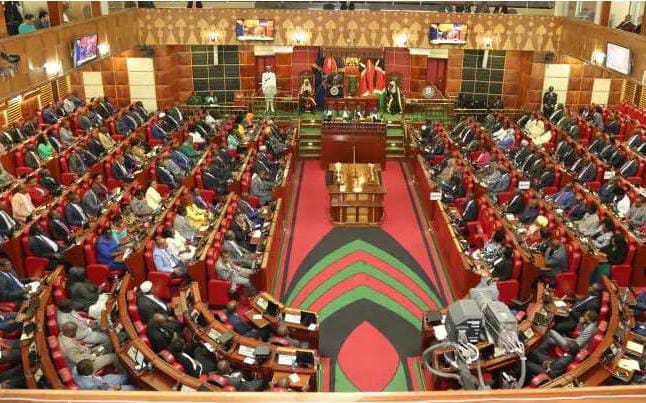
Kenya’s Parliament is once again in the spotlight after setting May 26, 2025, as the official vetting date for seven nominees to the Independent Electoral and Boundaries Commission (IEBC), a move that has triggered both political support and fierce criticism across the country.
The National Assembly’s Clerk, Samuel Njoroge, announced the date in a formal notice earlier this week, urging members of the public to submit any objections, supported by sworn affidavits and relevant documentation, no later than Wednesday next week.
At the heart of this latest political storm is the nomination of Erastus Ethekon Edung as Chairperson of the electoral body.
Alongside him, six nominees Ann Njeri Nderitu, Moses Alutalala Mukhwana, Mary Karen Sorobit, Hassan Noor Hassan, Francis Odhiambo Aduol, and Fahima Araphat Abdalla, await vetting by the Departmental Committee on Justice and Constitutional Affairs.
While the process is constitutionally mandated under Article 118(1)(b) and governed by the Public Appointments (Parliamentary Approval) Act, it is already drawing political fire.
In a scathing interview on Egesa FM, former Deputy President Rigathi Gachagua challenged the credibility of the final list, particularly questioning the omission of former CIC Chairperson Charles Nyachae, who he claimed outperformed others in interviews.
“There’s something deeper at play here,” Gachagua stated. “Nyachae’s exclusion is not just disappointing, it’s suspicious.”
However, not everyone is crying foul.
The Supreme Council of Kenya Muslims (Supkem) publicly threw its weight behind the nominations, defending the process as transparent and representative.
Supkem Chairperson Alhajj Hassan Ole Naado dismissed the criticism as political noise, asserting that the panel was inclusive and those protesting now had representation during the selection phase.
“The time for divisive rhetoric is over. Let the vetting take its course,” Naado urged.
He also proposed future electoral reforms where the president would simply ratify a single nominee selected by an independent panel, mirroring the Judicial Service Commission’s model.
The IEBC has operated without a fully constituted commission since early 2023, raising alarm among electoral justice advocates.
With the 2027 General Election just two years away, pressure is mounting to restore public trust in the electoral body through a transparent, merit-based appointment process.
As the clock ticks toward May 26, all eyes are on Parliament and on whether this vetting process will rise above Kenya’s polarised political landscape or be marred by it.

