


A senior prison officer at Lang’ata Women’s Prison on Thursday denied allegations that he assaulted mentally ill prisoner Fathiya Hamud alias Wairimu before her death in 2020, insisting she was alive and medically stable when he last attended to her.
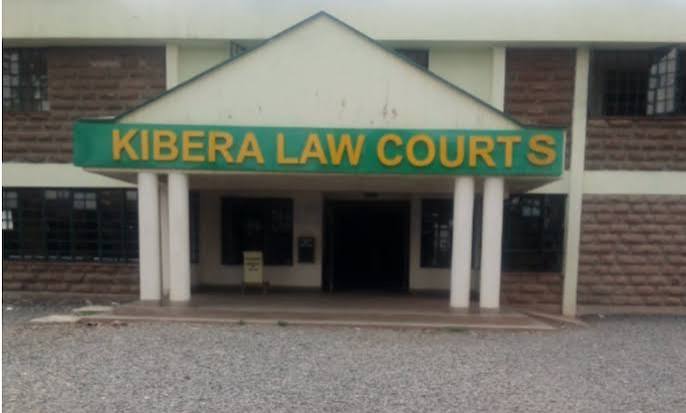
Senior Superintendent Atieno, who was then in charge of the prison’s health facilities and served as a clinical officer, told the Kibra Law Courts that Wairimu, a psychiatric patient, showed no signs of physical injuries during the medical examination he conducted after she was accused of swallowing stolen medication.
“I did not enter to apprehend anyone. I entered to take care of the patient,” Atieno testified, maintaining that he handed Wairimu over to prison officers after recommending she be placed in Cell One, where she remained until she later collapsed and died.
In her evidence, Atieno told the court that he had known Wairimu even before the events of February 28, 2020, because she had previously been incarcerated at the prison and was receiving treatment for mental illness.
“What made her special to us was because she was also a psychiatric patient within the facility,” he said.
He explained that Wairimu was taking psychiatric medication, including Artane, which he said was used to counter the side effects of other psychiatric drugs.
Although he was not the clinician on duty that Friday, Atieno said he had returned from a meeting at a sub-county health facility when the prison matron asked him to assist in clearing patients at the staff dispensary.
While there, a police constable informed him that Wairimu had allegedly entered the dispensary and stolen medication.
He said prison staff questioned the inmate, who admitted taking the drugs.
“They called Fatya and asked whether she had taken the drugs, and she said she had swallowed the drugs,” he testified.
According to Atieno, he proceeded to examine Wairimu, accompanied by Sergeant Habiba, explaining that female officers routinely accompany male clinicians during examinations of female inmates.
“When it comes to patient care, we are sensitive of religion,” he said.
The clinical officer told the court that he carried out a comprehensive physical examination to determine whether Wairimu had concealed medication on her body.
“We went and did a full body examination… She did not exhibit signs of experiencing side effects,” he testified.
He rejected claims that he assaulted the deceased using kicks or pipes.
“The only instrument to take care of the patient was a stethoscope. I entered with no pipe. In the health dispensary we do not have pipe.”
“I did not enter to apprehend anyone. I entered to take care of the patient,” he added.
Atieno described Wairimu as a physically weak inmate suffering from several medical conditions.
“Wairimu was very fragile. She was suffering from malnutrition and also asthmatic,” he said.
He also told the court that the inmate had previously exhibited aggressive and restless behaviour because of her psychiatric condition.
“Wairimu was very aggressive, restless. She didn’t want to stay at one place,” he testified.
The witness said he consulted Dr. Kisivuli regarding the alleged ingestion of medication and was advised that the likely effect would be dizziness.
“I called Dr. Kisivuli… the worst that could happen was that she would be dizzy and fall,” he said.
Following the assessment, Atieno recommended that Wairimu be moved to Cell One for observation.
“I made a recommendation for the patient to be taken to Cell One. I handed over to the duty officer when the patient was taken to Cell One,” he told the court.
He said he left the prison after completing his duties and returned to work on Monday, only to learn that Wairimu had died over the weekend.
“On Sunday, the nurse on duty was called that Fatya was not responding. The nurse attended to Fatya and she was referred to KNH and was unfortunately confirmed dead on arrival at the facility,” he testified.
Atieno’s evidence comes after another witness, inmate Samantha Muroiki, told the court that she allegedly witnessed Atieno and Sergeant Habiba assault Wairimu inside the prison dispensary.
The inquest has also heard evidence that Wairimu’s body had multiple injuries, including blunt force trauma, a swollen face, a swollen right eye, a mark near the right eyebrow and blood stains on her prison uniform, findings that have raised questions about the circumstances leading to her death while in custody.
The inquest seeks to establish how Wairimu sustained the injuries that led to her death and whether any prison officers should be held criminally responsible. The hearing continues before the Kibra Law Courts.

