


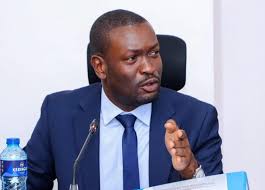
Nairobi Senator Edwin Sifuna has broken his silence on the controversial installation of Oburu Oginga as Orange Democratic Movement interim party leader, declaring the process unconstitutional and calling for proper adherence to party rules.
In a candid interview on a local TV station that aired Tuesday, February 4, 2026, the ODM Secretary-General challenged the legitimacy of the succession process that followed the death of former Prime Minister Raila Odinga in October 2025.
“The installation of Oburu Oginga as interim party leader was not procedural in accordance with the provisions of the Constitution,” Sifuna stated emphatically during the interview.
“What I would have advised had I been in that meeting is allow one of the deputies they can even act for one month and in 3 months’ time, call for a special NDC and do it procedurally and properly.”
The Nairobi Senator revealed he was absent from the crucial meeting where Oburu was installed as interim leader.
“I was not in that meeting because I was going to fetch my party leader to bring Baba back home. I don’t think anybody considers me important enough to be waited upon and they have their reasons why they did it in the manner they did,” he explained.
According to Sifuna, Article 17 of the ODM constitution stipulates that deputy party leaders should perform duties in rotation until a National Delegates Convention (NDC) is convened to elect a leader.
“We had three deputy party leaders. They should have agreed on a rotation until the party formally elected a new leader through the NDC,” Sifuna said, emphasizing that following constitutional procedures is necessary to legitimize Oburu’s leadership.
The three deputy party leaders at the time were Mombasa Governor Abdulswamad Nassir, Kisii Governor Simba Arati, and Vihiga Senator Godfrey Osotsi.
Under proper procedure, Sifuna argues, any of these officials should have temporarily assumed leadership duties until a special National Delegates Convention could be convened.
The succession controversy has exposed deep fissures within ODM.
Sifuna has also raised eyebrows over the funding of the controversial “Linda Ground” forums being conducted by the Oburu-Gladys Wanga faction across the country.
“I can state authoritatively here that the money and the resources you see being spent in those ODM rallies, the so-called Linda Ground forums, are not coming from ODM headquarters,” Sifuna declared.
As one of the party’s official signatories to the party bank account, he confirmed he has not signed off on any funds for these activities.
The Linda Ground initiative has been holding consultative forums in Kakamega, Busia, Kisii and Nyamira counties, ostensibly to gather views from ODM delegates on whether the party should enter pre-coalition talks with President William Ruto’s United Democratic Alliance (UDA).
Despite speculation about his imminent removal as Secretary-General, Sifuna remained defiant about his position within the party.
“I am in ODM, and nobody can kick me out of ODM. I have no intention of leaving. You don’t have to be an official to be a member of the party,” he stated firmly.
When pressed about the possibility of being ousted at a future NDC, Sifuna displayed remarkable equanimity.
“It is okay. There is nowhere it is written that Sifuna can be the only one who is SG,” he observed, adding that “I have young people in ODM who, I know for a fact, if they are given the opportunity, they can do this job even better than Sifuna or all the other SGs that have served before.”
The succession drama traces back to October 15, 2025, when Raila Odinga collapsed during a morning walk at a health facility in Kerala, India, where he was receiving treatment for diabetes, hypertension and chronic kidney disease. He died from cardiac arrest at age 80.
Oburu Oginga, Raila’s elder brother and Siaya Senator, was swiftly installed as interim party leader by the National Executive Council (NEC) shortly after Raila’s death.
The appointment was later ratified by the National Governing Council (NGC) on November 13, 2025, ahead of the party’s 20th anniversary celebrations.
However, critics like Sifuna argue that the process bypassed proper constitutional channels and created a legitimacy crisis within Kenya’s main opposition party.
The constitutional battle within ODM comes at a crucial time as the party navigates potential pre-coalition talks with the ruling UDA party ahead of the 2027 general elections.
The split between Sifuna and the Oburu-Wanga faction reflects deeper divisions over the party’s direction and its relationship with President Ruto’s government.
Sifuna has been a vocal critic of any alliance with UDA, emphasizing values-based politics over transactional arrangements.
“ODM values are supremacy of party members, social and economic justice, respect for constitutionalism and the rule of law, respect for individual and people’s rights and freedoms, democratic governance, and people’s participation. Any partner must mirror these values,” he said.
The unfolding drama within ODM will likely intensify as the party prepares for what could be a contentious National Delegates Convention, where leadership positions, including Sifuna’s role as Secretary-General, may be decided by delegates rather than party bosses.
For now, the constitutional purist from Nairobi remains unbowed, insisting on proper procedure even as the party leadership he helped build appears ready to move on without him.

