


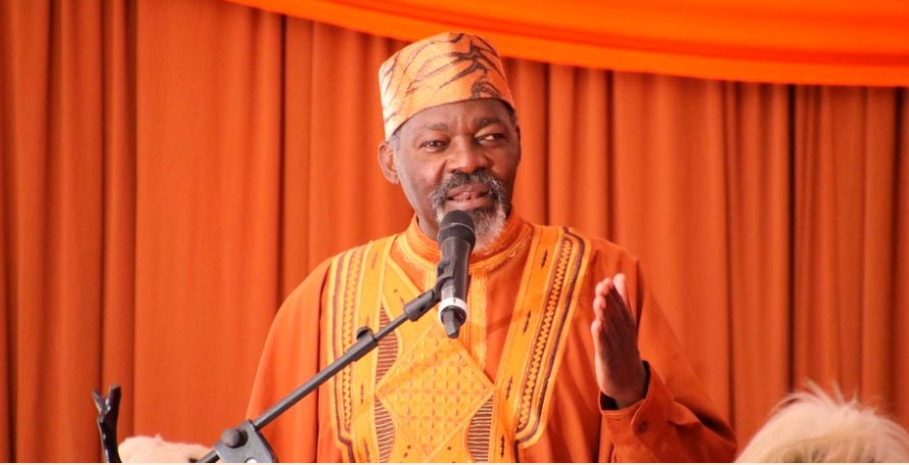
Businessman Kung’u Muigai and his two companies have taken the extraordinary step of suing eight senior judges and the Judicial Service Commission (JSC) over the loss of a 443-acre coffee farm in Kiambu County.
The matter has now been referred to Chief Justice Martha Koome for the empanelment of a multi-judge bench to hear and determine the complex petition.
The referral came from Justice Bahati Mwamuye, who noted that the issues raised in the petition are of such constitutional significance that they cannot be addressed by a single judge.
“Since the respondents, the eight judges and the JSC, have not objected, I find that the petition raises serious constitutional issues under Article 165 of the Constitution and is referred to the Chief Justice to appoint an uneven number of judges to hear and determine it,” Justice Mwamuye ruled on Wednesday November 226,2025.
The petition, spanning 230 pages, names Supreme Court Justices Mohamed Ibrahim, Njoki Ndung’u, and Isaac Lenaola, and Court of Appeal Justices Milton Makhandia, Kathurima M’Inoti, Sankale Ole Kantai, Francis Tuiyott, and John Mativo.
It claims the judges relied on a non-existent 1992 consent decree to uphold the sale of the Kiambu farm by Kenya Commercial Bank (KCB).
“No consent was ever signed or recorded on May 4, 1992, yet the eight judges who handled the dispute have consistently treated it as a valid decree, allowing the sale of our 443-acre coffee farm,”states the petition.
The dispute dates back over 30 years. Benjoh Amalgamated Limited and Muiri Coffee Estate Limited, which together owned and secured the land, had challenged KCB’s move to exercise its power of sale.
While a 1997 High Court ruling found that no consent existed, a 1998 appellate bench overturned the decision. Subsequent benches, including those led by the current judges named in the petition, reaffirmed KCB’s position, culminating in the sale of the land.
Lawyer Nelson Havi, representing the petitioners, says the case goes beyond property loss to test the limits of judicial immunity under Article 160 of the Constitution.
“Judicial immunity is intended to protect judges acting in good faith, but it cannot extend to manifestly illegal or unconstitutional acts. Our clients have lost valuable land based on a decree that does not exist,”Havi argued in court papers.
The petition also accuses the JSC of failing to investigate complaints submitted between October 2024 and August 2025, dismissing them without explanation.
“The JSC’s refusal to probe these allegations or disclose the judges’ responses undermines constitutional oversight,”the petition states.
Central to the case is whether judges who act in bad faith or rely on non-existent orders can still claim immunity, a question that could have sweeping implications for judicial accountability in Kenya.
The petitioners are seeking declarations invalidating the 1992 consent decree, confirming that their constitutional rights to property and a fair hearing were violated, and clarifying whether judicial immunity shields unlawful judicial acts.
The case, which now sits with CJ Martha Koome, is expected to be closely watched by legal practitioners, civil society, and property owners, as it could redefine the scope of accountability for judges and oversight mechanisms of the Judiciary in Kenya.
“Our clients’ experience illustrates a broader problem where judicial decisions can lead to irreversible harm without recourse. This case seeks to ensure that judicial power is exercised responsibly and within the law,” Havi added.
With the petition now referred to the Chief Justice for bench formation, the stage is set for a legal showdown that could reshape the understanding of judicial protection and citizens’ rights under the Constitution.

