


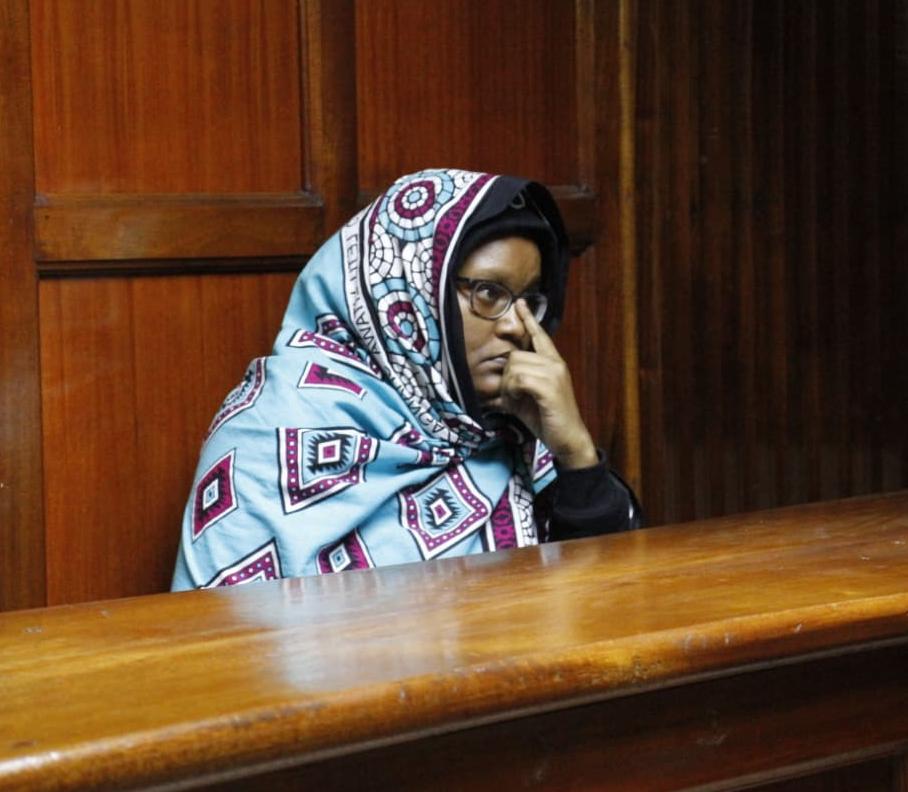
The High Court has ordered the release of Halima Ngache, the Mombasa woman at the centre of a high-profile investigation into alleged publication of President William Ruto’s flight movements on social media, setting the stage for what could become a landmark legal battle over the limits of online expression, digital surveillance and national security in Kenya.
In a ruling delivered on Friday, Justice Alexander Muteti directed that Ngache be released from police custody by 5 p.m., effectively overturning an earlier order by the Milimani Law Courts that had permitted detectives to hold her for three days to complete investigations.
The judge also directed that the matter be mentioned on Monday, when the High Court is expected to issue further directions on the constitutional issues raised in the case.
Ngache, popularly known online as Princess Halima, was arrested on June 30 during what the Directorate of Criminal Investigations (DCI) described as an intelligence-led operation in Kazandani, Bamburi, Mombasa County.
Detectives from the DCI’s Serious Crimes Unit allege she is linked to the verified X account @sholard_mancity, which allegedly published detailed information about President William Ruto’s international travel, including flight routes, destinations and aircraft details during recent official trips to Europe.
According to investigators, the account published posts claiming that President Ruto travelled aboard a chartered private jet from Belgium to Norway on June 8, later flew from Norway to Finland on June 10, and on June 25 allegedly departed Kenya with plans to board another private aircraft in Madagascar.
Court documents filed by Corporal Edwin Metto state that the motive behind the publication of the information remains unknown.
“…the motive of the alleged tracking remains unknown and the information published by the said user has caused apprehension on the person of the Head of State as well as Kenyan citizens,” the investigating officer stated in an affidavit filed before court.
The DCI maintains that the alleged posts may amount to offences under the Computer Misuse and Cybercrimes Act, arguing that publication of the travel movements of protected persons raises significant national security concerns.
Following her arrest, detectives recovered two mobile phones, a Dell laptop, a Tecno tablet and three flash drives, which they sought to subject to forensic examination.
Investigators initially requested seven days to complete the analysis and obtain information from other agencies before forwarding the investigation file to the Office of the Director of Public Prosecutions (ODPP).
However, Senior Principal Magistrate Theresa Nyangena declined the request and instead granted detectives three days, finding that the shorter period would be sufficient to complete the remaining investigations.
One of the central issues raised during the proceedings was that the X account under investigation allegedly remained active even after Ngache had been arrested and transported from Mombasa to Nairobi.
The DCI argued that the continued activity suggested more than one individual could have been operating the account.
Ngache, however, relied on the same fact to dispute investigators’ claims that she was solely responsible for the account.
She told the court that despite all her electronic devices being seized, fresh posts continued appearing on the platform while she remained in police custody, casting doubt on allegations that she was its administrator.
That argument has become one of the major points likely to feature prominently as the constitutional challenge proceeds.
Ngache has also questioned the manner of her arrest, arguing that she was apprehended without being informed of the reasons for her arrest and without a warrant before being transferred from Mombasa to Nairobi.
The case has attracted widespread public attention because it sits at the intersection of national security and constitutional freedoms.
While investigators argue that publishing real-time or detailed information concerning the movements of a sitting Head of State could expose protected persons to security risks, digital rights advocates have increasingly questioned whether authorities are stretching cybercrime laws to criminalise online speech.
The matter also comes only days after another significant High Court decision striking down provisions of the Computer Misuse and Cybercrimes (Amendment) Act, 2025, which had granted authorities broad powers to block websites without court orders.
That judgment reaffirmed constitutional protections on freedom of expression and access to information, further intensifying debate over the scope of digital regulation in Kenya.
Legal experts say the outcome of Ngache’s case could shape future investigations involving open-source intelligence, social media reporting and the publication of publicly available aviation data.
Globally, flight tracking has become increasingly accessible through publicly available aviation platforms, allowing users to monitor aircraft movements using transponder signals.
Governments, however, often distinguish between publicly available aviation data and the deliberate dissemination of information involving protected state officials where security considerations arise.
In Kenya, the DCI insists its investigation is not aimed at restricting legitimate freedom of expression but at determining whether any criminal offences were committed under existing cybercrime laws.
For now, Justice Muteti’s ruling means Ngache will regain her freedom while detectives continue their investigations.
Whether prosecutors ultimately approve criminal charges, and whether the courts draw a new constitutional line between digital expression and national security, will begin to emerge when the matter returns to the High Court on Monday.

