


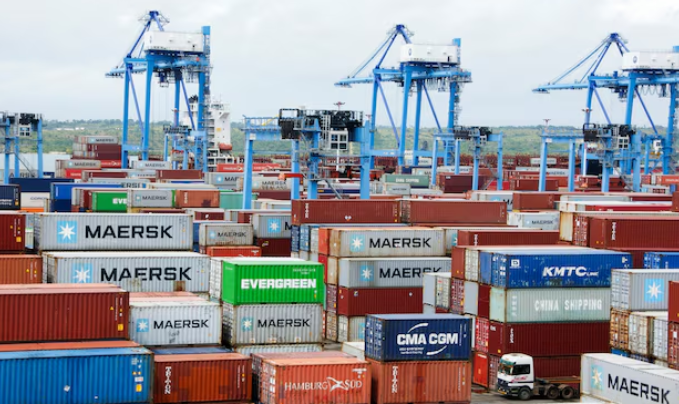
Kenya has announced it will appeal a recent ruling by the East African Court of Justice (EACJ) that suspended the country’s trade agreement with the European Union, a move that has sent shockwaves across the export sector.
The suspension threatens access to markets for Kenyan farmers, exporters, and manufacturers just months before the peak export season.
Trade Minister Lee Kinyanjui described the appeal as urgent, emphasizing the economic risks of leaving the ruling in place.
“We cannot allow Kenya’s exporters and farmers — who depend on access to EU markets, to bear the brunt of a legal technicality,” he said. “We will challenge this ruling decisively.”
The ruling follows a challenge by a civil society group arguing that Kenya’s deal with the EU violated regional East African Community (EAC) rules because other member states were not consulted.
While the court did not invalidate the agreement outright, it suspended implementation pending a full hearing.
The EU–Kenya Economic Partnership Agreement (EPA) has been a lifeline for Kenyan exports. It offers duty-free access to the EU for products such as tea, coffee, fruits, vegetables, and flowers.
In 2024 alone, exports under the EPA were valued at over USD 1.5 billion, supporting thousands of farmers and exporters nationwide.
“The suspension threatens livelihoods across the country,” said Jane Mwangi, a horticulture exporter in Naivasha.
“Our contracts with European buyers depend on stable market access, and any delay affects both income and jobs.”
Analysts warn that the ruling could have broader implications for Kenya’s economy.
Reduced export access would not only affect small and medium businesses but also risk foreign exchange shortages, price increases for consumers, and reduced investor confidence in the country’s industrial sector.
The government has pledged a dual approach: a legal appeal in court and diplomatic engagement with EAC partners to ensure the deal’s continuity.
Officials say Kenya remains committed to the EPA, noting its role in boosting value addition, industrial growth, and long-term economic diversification.
“This is more than a trade dispute. It tests Kenya’s ability to balance national economic interests with regional obligations. The outcome will influence investor confidence and the future of export-led growth,” Political economist Dr. Patrick Otieno explains the wider significance.
Meanwhile, farmers and exporters are bracing for uncertainty.
Many are calling for government support to navigate potential supply chain disruptions and meet EU standards amid the legal limbo.
The appeal will be closely watched by stakeholders across Kenya, as it will determine not only market access to Europe but also set a precedent for how the country navigates regional trade obligations and protects national economic interests.
With the clock ticking, all eyes are on Nairobi and the EACJ as Kenya fights to safeguard its economic lifeline, protect jobs, and secure market access for its critical agricultural exports.

