


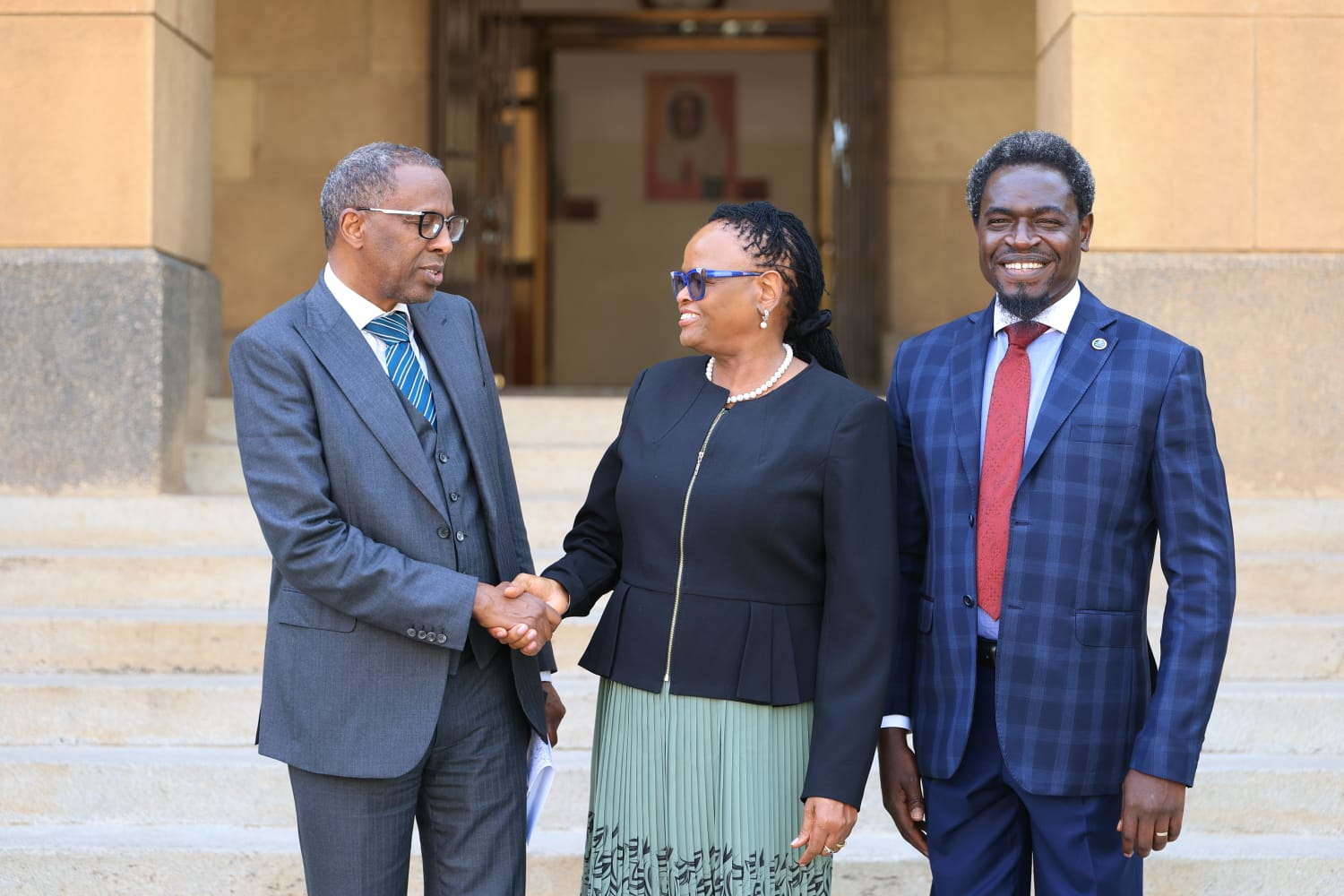
The air was thick with anticipation as Chief Justice Martha Koome on Wednesday welcomed Senior Counsel Ahmednasir Abdullahi into a consultative meeting that many thought would never happen.
Photos posted on CJ X account show legal heavyweights Philip Murgor SC, Nelson Havi, and Law Society of Kenya President Faith Odhiambo, who many says may have brokered the historic truce between Koome and Ahmednasir.
This wasn’t just another routine meeting. This was the first face-to-face encounter between the CJ and Ahmednasir since the Supreme Court’s controversial ban two years ago, a ban that had sent shockwaves through the legal profession and sparked fierce debates about judicial overreach and freedom of practice.
“Chief Justice Martha Koome convened a consultative meeting with senior lawyers, including Philip Murgor, Ahmednassir Abdullahi, Nelson Havi, and LSK President Faith Odhiambo, to discuss access to justice,” the message posted on CJ account states.
“The engagement focused on collaboration, tackling corruption, and removing barriers to strengthen efficiency, integrity, and public confidence in the justice system.”
On January 23, 2024, the Supreme Court took the unprecedented step of barring Ahmednasir, along with his partners and associates, from appearing before it.
The decision was met with disbelief and outrage in legal circles. How could Kenya’s apex court ban an entire law firm without what many considered justifiable cause?
For two years, the firebrand lawyer Ahmednasir continued his crusade from the sidelines, launching blistering attacks on what he termed “JurisPESA”,his provocative label for alleged corruption in the judiciary.
His social media posts became legendary, mixing legal analysis with scorching criticism that made judges squirm and the public pay attention.
When the Supreme Court finally lifted the ban, thanks to intervention by Paul Muite SC, Fred Ngatia SC, and Dennis Mosota, many expected Ahmednasir to declare victory and return triumphantly to practice.
Instead, he threw down a gauntlet that left even his supporters stunned.
“I have decided NOT TO PRACTICE before the court,” he declared, outlining three non-negotiable demands: an admission of wrongdoing by the Court, addressing his grievances about judicial integrity, and meaningful institutional reforms.
His reasoning? “If I go back to practice before the Supreme Court, who is left to fight against JurisPESA in our courts?”
It was vintage Ahmednasir, defiant, principled, and unwilling to be appeased by what he called “a ploy.”
But then came the CJ’s move. The consultative meeting wasn’t just about mending fences, it was about confronting the elephants in the room: corruption allegations, barriers to justice, and the erosion of public confidence in the courts.
The agenda was ambitious: strengthening collaboration between the LSK and the Judiciary, addressing systemic barriers to justice delivery, and exploring solutions to enhance efficiency, integrity, and the rule of law.
By inviting Ahmednasir to the table alongside other critics like laywer Havi, CJ Koome sent a powerful message: dissent would be heard, not silenced.
The meeting concluded with both sides acknowledging the need for dialogue, though the road ahead remains uncertain.
Ahmednasir’s closing challenge to the CJ, offering his experience as former LSK Chairman and JSC member to help reform the courts, hangs in the air like an unanswered question.
Can the Judiciary reform itself from within? Will the Supreme Court acknowledge its mistakes? And most intriguingly, will Ahmednasir eventually return to practice before the very court he’s sworn to reform?
For now, Kenya’s legal community watches with bated breath as two formidable forces, one wielding the gavel, the other wielding the pen, navigate from feud to what might become the most consequential collaboration in the Judiciary’s fight against corruption.
The war against “JurisPESA” has found an unlikely battlefield: the negotiating table.

