


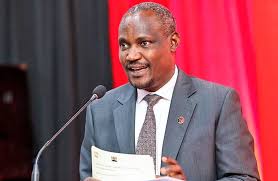
In a sweeping announcement that could transform the lives of millions of struggling families, National Treasury Cabinet Secretary John Mbadi has declared war on poverty taxes, unveiling plans to completely exempt Kenyans earning Ksh30,000 or less from paying income tax.
The bold proposal, backed by President William Ruto, would put cash directly back into the pockets of over 4 million workers who currently surrender a portion of their modest salaries to the taxman each month, money they desperately need for food, rent, and school fees.
“Anyone earning below Ksh30,000 should not pay PAYE. It is simply not fair,” Mbadi told a packed Budget and Privatisation Forum in Kiambu drawing applause from attendees.
Then, with characteristic candour, he added: “I earn a million shillings let the government come for me and my fellow MPs instead.”
For Jane Wanjiku, a shopkeeper in Nairobi’s Kawangware estate who earns Ksh28,000 monthly, the news feels almost too good to be true.
After rent, transport, and feeding her two children, she’s often left with barely enough to see the month through.
“If they stop taking tax from my salary, that’s an extra Ksh2,000 in my hands every month,” she says.
“That could pay school fees, or buy milk and bread when we run out. It would change everything.”
She’s not alone. Treasury data shows that approximately 1.5 million salaried workers earn Ksh30,000 or less, with another 2 million earning just slightly above that threshold.
Combined, the proposed tax relief could benefit upwards of 4 million Kenyans,a substantial segment of the country’s formal workforce.
“This Is Survival Money, Not Taxable Income”
Mbadi was unequivocal in his reasoning: a Ksh30,000 salary is not wealth but it’s survival.
“This is barely enough to cover rent, food, transport, and school fees for a family,” he explained.
“It is not the kind of income where the government should still be seeking to levy taxes. These are hardworking Kenyans just trying to get by.”
Under the current system, anyone earning above Ksh24,000 per month falls into the taxable bracket, meaning even the lowest-paid formal workers lose a slice of their pay to PAYE (Pay As You Earn) deductions.
The Treasury’s new plan would not only raise that threshold to Ksh30,000 but also introduce a 5 percent tax reduction for those earning between Ksh30,000 and Ksh50,000, offering relief to lower-middle-income earners as well.
Beyond the immediate relief for families, economists say the move could inject much-needed energy into Kenya’s sluggish economy.
“When low-income earners have more money in their pockets, they spend it — on food, clothes, transport, school supplies,” says Dr. Mercy Kiprotich, an economist at Strathmore University.
“That spending powers small businesses, market vendors, and local suppliers. It’s a direct stimulus to the grassroots economy.”
Mbadi echoed this sentiment: “We want to give you something in your pocket so that we can spur demand in the economy, because it is struggling.”
Local traders and matatu operators have reported declining sales in recent months as households tighten their belts amid rising fuel costs, inflation, and stagnant wages.
A tax break of this magnitude could reverse that trend.
But there’s a flip side. To offset the revenue loss from exempting millions of low earners, Mbadi says the government will intensify efforts to bring informal earners into the tax system and improve compliance among higher earners.
“We cannot continue to have a situation where only a small percentage of Kenyans carry the tax burden,” he cautioned.
“We will broaden the base, but we will do it fairly, without heavy-handedness.”
This could mean stricter enforcement for businesses, professionals, and high-net-worth individuals who operate outside the formal payroll, as well as digital tools to track income more effectively.
Still, Mbadi insists the focus remains on fairness: “Let those who can afford to pay, pay. But let those who are struggling, breathe.”
The proposal will now head to Parliament as part of the upcoming Finance Bill, where it will face debate and scrutiny from lawmakers.
If approved, the changes could take effect as early as July 2026, the start of the next financial year.
For millions of Kenyans like Jane Wanjiku, the wait will be anxious but hopeful.
“I pray they pass it,” she says. “Because for people like us, every shilling counts.”

